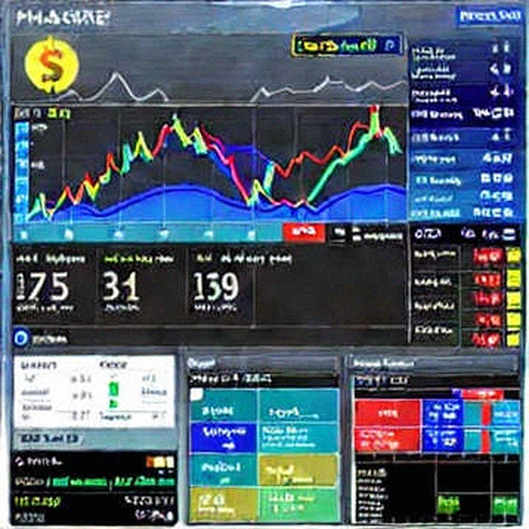
The Strait of Hormuz just went from a shipping lane to a liquidity event. Over the past 72 hours, crude futures spiked 9% after Iran refused to reopen the waterway amid a deepening military standoff with the United States. Bitcoin reacted like a teenager who just heard the WiFi router died: first denial, then anger, then a 4% grind lower. The order books are the loudest thing on the audio feed right now. But the chart only shows one line. The real story is hiding in the bid-ask spreads of Tehran's stablecoin market, in the hashrate of Iranian mining farms, and in the interest rate curves of DeFi protocols that have no idea a geopolitical storm is even happening.
Hormuz is not just another choke point. Every day, roughly 21 million barrels of crude oil — about 21% of global seaborne petroleum trade — and nearly 20% of the world's LNG flow through a 33-kilometer strait. That's the equivalent of every gas pump on Earth drawing from the same straw. When Iran says "we refuse to open," it can mean three very different things: a diplomatic refusal to negotiate, an official declaration that the waterway is "unsafe," or an actual physical blockade of tankers. The distinction matters more for crypto than for conventional oil traders. A diplomatic refusal is noise. An unsafe declaration triggers insurance hikes and re-routing. A physical blockade is a climate event for global liquidity.
This analysis sits at the Interpretation II–III boundary. We're not in the "maybe" zone. The market is pricing in real damage. And that's where the crypto overlap starts to get strange.
Why should a blockchain journalist care? Because Iran is a mining superpower, a sanctioned economy that has learned to route money through stablecoins, and a geopolitical variable that moves the same macro dial that turns Bitcoin from a hedge into a risk asset. The tanker war is now a mempool war. I've seen this movie before. In 2017, I skipped lectures to watch Ethereum testnet blocks. Today I'm watching satellite images of the Gulf and order books at the same time. The tools changed, but the pattern recognition hasn't.
The Macro Loop: Why Bitcoin Drops When Oil Spikes
Here is the uncomfortable truth in four steps: Oil up. Inflation expectations up. Terminal rate up. Real yields up. Duration assets down. Bitcoin is the longest-duration asset on the planet. There is no escape hatch in the macro loop. Every oil shock since 1973 has ended with central banks hiking rates and risk assets getting crushed. Bitcoin is not immune. It trades like a high-beta tech stock on Friday afternoons, except Friday is every day.

During the 2022 Russia-Ukraine invasion, BTC initially rallied above $44,000. Then it collapsed to $35,000 as inflation fears pushed the Fed into aggressive tightening. The same pattern is forming now. The only difference? This time, the energy shock is happening at the same moment as a liquidity crisis in DeFi. That's a double tap to the skull.

Let me walk you through the transmission mechanism in more detail. When the Strait of Hormuz closes, seaborne oil and LNG supplies face delays and risk. Spot and forward prices rocket because the marginal barrel just got a war premium. That premium passes through to consumer prices within weeks. Central banks in the US, Eurozone, and Japan — already skittish about sticky services inflation — watch the bond market panic. They hold rates higher for longer. The dollar strengthens. Emerging-market currencies weaken. And every asset that was priced off "free money" gets repriced off "real money."
I remember sitting in front of three monitors in early March 2022, watching BTC pump alongside gold for exactly one day. The next day, the front-month oil future hit $124. And the "digital gold" narrative cracked faster than a cheap NFT. By March 15, BTC was down 38% from its November high. Gold was up 8% over the same period. That's your statistical artifact. Bitcoin is not a hedge. It's a shadow high-yield bond with a limited supply and an infinite imagination.
So when headlines scream "Iran shuts Hormuz, buy Bitcoin," understand what's actually happening: The initial fear bid hits risk assets, but the follow-through depends on central bank reaction. If the crisis forces the Fed to cut rates, Bitcoin rallies. If it forces the Fed to hike, Bitcoin bleeds. This is not rocket science. It's a liquidity calculus. Liquidity is just patience wearing a speedo.
Iran's Crypto Underground Is Already Running
Now let's talk about the other side of the ledger. Iran has been living under sanctions for decades. It has one of the highest rates of crypto ownership in the Middle East. The Iranian rial has collapsed so many times that a generation of tech-savvy kids treats stablecoins as their savings account. That's not a prediction. That's an on-chain fact.
When the Strait closes, what happens to Iranian mining farms? Iran produces cheap natural gas, much of it flared off. That's why Iranian Bitcoin miners at one point accounted for nearly 5% of global hashrate, despite sanctions. The Chinese ban pushed miners to Iran, Kazakhstan, and Texas. Iran's cheap energy was a magnet. But a naval blockade doesn't just stop oil tankers; it also disrupts the import of ASIC miners and the internet connectivity that miners depend on.
I remember a Discord call in late 2019 with a developer in Tehran. He laughed about how easy it was to receive payments in Tether through local brokers. That was before the US Treasury really started looking at stablecoin sanctions enforcement. By 2024, Tether froze addresses holding millions linked to illicit activity. The environment changed. But the deeper habit didn't.
Here's what the sanctions calendar looks like in practice. Every few months, the US OFAC adds a new Iranian exchange or wallet to the Specially Designated Nationals list. The exchange gets FROZEN. But a network of peer-to-peer brokers pops up in its place. Crypto doesn't eliminate sanctions; it just makes them more like whack-a-mole. And when Hormuz closes, the number of sanctioned-fueled transactions will spike. So will the data available to forensic analysts.
The real question is: can Iran still move money if the physical port is under blockade? The answer is yes. Oil tankers might be stuck, but stablecoin transactions aren't. A tanker requires 30 days of prep, insurance, crew, and a legal flag. A USDT transfer requires 3 minutes and a phone. That's the fundamental asymmetry between the physical world and the digital world. And it's exactly why the US Department of Justice is training more blockchain investigators than it was a year ago.
I started tracking Iran's non-SWIFT dollar rails during DeFi Summer in 2020. I was chatting with developers in Austin, but they kept referencing liquidity pools with high volumes from Middle Eastern IPs. The ledger doesn't lie. It just whispers in a dialect you have to learn.
Stablecoins as Financial Drones
Now we enter the territory that keeps Washington strategists up at night. If Iranian oil is sold in USDT, does the United States have jurisdiction? Stablecoin issuers can freeze addresses, but they can't freeze a decentralized exchange on a non-custodial chain. And if a country like China, India, or Japan starts buying Iranian oil via a stablecoin rail to circumvent US sanctions enforcement, the dollar's monopoly starts fracturing.
It's a paradox. USDC and USDT are the most efficient tools for the US to project dollar sovereignty. They are also the easiest tools for adversaries to use the dollar's liquidity without asking permission. That's the dual-use nature of code.
Let me give you a concrete example. Suppose a Pakistani refinery wants to buy discounted Iranian crude. Under US sanctions, a plain-vanilla letter of credit through a bank is impossible. But if the refinery converts local currency into Tether through an OTC desk in Dubai, then sends that Tether to an Iranian broker who splits it into rial payments to the National Iranian Oil Company, the transaction happens almost entirely outside the traditional banking system. The risk is not zero, but it's a hell of a lot cheaper than getting caught using SWIFT.

I first spotted this contradiction during DeFi Summer in 2020. Protocols like Curve and Aave were becoming dollar markets, not just token markets. The same stablecoins that powered yield farming in Austin were powering rent payments in Tehran. Nobody wanted to say it out loud because it muddied the "code is law" narrative. But the data was there.
If Hormuz is blocked, expect the US to ramp up stablecoin regulation. It will be sold as anti-terror financing. The true target will be neutral settlement layers. We saw a preview in 2023 when the Treasury zeroed in on Tron-based USDT money-laundering flows. The next step might be mandatory know-your-customer on any wallet interacting with a decentralized exchange. That would break the fundamental ethos of permissionless finance.
But here's the catch: a blockade also creates more demand for these rails. Sanctions can't un-ring the bell. If Iran can't export physically, it will export digitally. And every digital export increases the network effect of stablecoins and decentralized finance. Forcing Iran into crypto might be the fastest way to accelerate dollar de-dollarization.
DeFi's Disconnect
Now let's go deeper into the rabbit hole. During a geopolitical liquidity shock, the most honest prices often appear in on-chain money markets. But here's my problem with Aave and Compound: their interest rate models are arbitrary, disconnected from real-world supply and demand. I've said it before, and I'll say it again: these protocols use a kink-shaped interest curve that has nothing to do with actual credit risk or capital needs. It's a smoothing function that punishes usage spikes.
When panic hits, borrowers rush to stablecoins. On Aave, utilization jumps to 90%+, and the borrow rate spikes past 100% APY. Is that a signal of actual capital demand? No. It's a signal of fear. The models are designed to punish liquidity hoarding, not to reflect economic reality. In crypto, we call this "risk premium." In finance, it's called a bug.
Let me take you back to the Curve Finance fall of 2020. I was on a Discord voice channel with devs and noticed something weird in the voting escrow mechanism. The time-decay of veCRV created a perverse incentive to lock tokens for 4 years, which looked like commitment. But the actual economic behavior was pure theater. When market conditions shifted, the locked tokens couldn't move, and the protocol's governance became a prisoner of its own promises. The same logic applies here: any interest rate model that ignores geopolitical context will blow up tail risk.
So when Iranian tanks roll (or don't), the DeFi rate will spike, and the pundits will claim it's a "healthy market response." It's not. It's a smoke detector going off in a house with no fire — except sometimes there is a fire. The real signal is the stablecoin premium, not the borrow rate. If you're a DeFi risk manager, you should be looking at the premium of USDT on Iranian local exchanges, because that's the market's true assessment of sanctions and war risk.
Mining, Stranded Gas, and the ASIC Supply Chain
Here's a counterintuitive twist: a Hormuz closure might actually help Bitcoin miners in the long run. Let me explain. If Iran is cut off from export markets, its natural gas gets stranded. Bitcoin mining thrives on stranded energy. Over time, that surplus could make Iranian mining cheaper than Saudi oil. But the bottleneck is hardware.
ASIC manufacturing is concentrated in China and Taiwan. Shipping an Antminer through the Persian Gulf right now is like sending a carry-on into a maelstrom. Insurance costs are skyrocketing. Miners in the region may be unable to expand, while existing rigs might face power grid disruptions as civilian demand takes priority. The net effect: global hashrate could dip temporarily, especially if Iranian miners are forced offline. That is a supply shock for BTC's security budget, which is usually positive for price because difficulty adjusts. But don't confuse that with a price pump; the macro liquidity effect will dwarf the hashrate effect.
I've seen this play out before. During the 2021 Chinese crypto ban, hashrate collapsed, then recovered in six months. Miners are cockroaches; they survive everything. But the physical supply chain is a different beast. If a key shipping lane closes, the logistics time for new hardware doubles. That means the existing fleet is more valuable. That's why mining firms' stock prices might outperform BTC in the short term.
Iran has an interesting play here. Its flared gas is already used for mining in some provinces. If the Strait blocks exports, the gas that was supposed to go to Japan or South Korea gets redirected to local power plants. That power can run more mining rigs. The Iranian government might tolerate a smaller mining industry if it's the only way to monetize stranded energy. This is the kind of gray-market economics that makes sanctions enforcement a nightmare.
The Military Escalation Ladder and Digital Asset Safe Havens
Let's analyze the military balance in the Strait, not as a war nerd, but as a trader. Iran's anti-access/area-denial (A2/AD) system is a multi-layered mesh of anti-ship ballistic missiles, drones, and mines. The Fateh and Khalij-e Fars missiles have ranges up to 700 km and can maneuver at terminal speed. This is not a ragtag fleet; it's a credible threat. The IRGC's naval forces are in Qeshm, Bandar Abbas, and Jask, ready in a near-forward posture. They have hundreds of small fast attack craft, and they've practiced swarm tactics for decades.
For crypto, the key question is: where do individuals and institutions put money as the military situation escalates? In 1987's Tanker War, the baselines changed after each attack. In 2026, the baseline is digital. When the first missile flies, the sell order for Bitcoin will hit the exchange before the news hits the terminal. The order book is faster than the news feed.
The Persian Gulf is also a major artery for the fiber optic cables connecting the Gulf states to Asia. A blockade could threaten those cables. If Iran disrupts undersea cables near Fujairah (it did not, but if it did), the financial system would face a 2003-style outage. That's a tail risk that crypto was designed to avoid. Bitcoin's network is likely to run even if some regional internet access is lost. The miners are globally distributed now. Iran's hashrate can go offline, and the network adjusts in two weeks. The resilience of public blockchains is a feature, but it doesn't protect you from the Fed.
The US Fifth Fleet at Bahrain is the only fast-reaction military force available. It can deploy carrier strike groups, nuclear submarines, and mine countermeasure vessels to reopen the strait. That operation would be an enormous physical exercise: clearing mines, escorting tankers, and striking shore-based missile batteries. It's expensive and risky. The Pentagon will try to avoid it. This means the crisis will likely take the form of a "soft blockade": Iran harasses ships, inspections, drones buzzing overhead, but not yet sinking a vessel. That's the gray-zone mode. In gray-zone mode, the market sees a slow bleed, not a sudden outage. That's worse for crypto because it keeps the uncertainty premium elevated without a clean resolution.
Sanctions, SWIFT, and the New Silk Road of Shadows
Iran's economy is already a ghost. The US and EU have sanctioned everything that moves. Iran can't access SWIFT. It uses barter, informal brokers, and a growing web of crypto intermediaries. The National Iranian Oil Company has reportedly accepted payment in crypto in some transactions, though the details are murky. The fact that a Crypto Briefing article even discussed this suggests the industry knows something.
Here's the analytical insight most people miss: Iran's primary demand is not the ability to export oil; it's the ability to get paid. A stablecoin-based payment rail can achieve that even under a blockade. The blockade reduces physical exports, but if the Israelis or Americans seize tankers, the payments still settle on-chain. That is a giant middle finger to traditional sanctions enforcement.
This is why the US Treasury is so focused on stablecoin regulation. The 2024 law expanded sanctions to cover financial transactions beyond banking. But code doesn't care about law. Decentralized exchanges are the new hawalas. And when money moves through a non-custodial contract, there's no bank to freeze, no intermediary to subpoena, no branch to close. The enforcement burden shifts entirely to the intelligence community and chain analytics firms.
I've personally watched money movement patterns from sanctioned exchanges to DeFi protocols. It's not hard to find if you know the block explorers. The hard part is legal attribution. In a world where Hormuz is closed, the demand for these rails will surge. The infrastructure might choke, but it won't shut.
Let's also consider the supply side. Many Iranian imports come through the Strait, including food and medicine. If the physical route is cut, the Iranian economy shrinks. That makes crypto more relevant as a store of value, but also more volatile. People who lost life savings in the rial will buy Bitcoin, pushing BTC demand up in the local market. That generates a premium on exchange rates, which arbitrageurs will exploit. You can trade this premium if you have access to local rails. But it's a dangerous game.
Information Wars and the Signal-to-Noise Ratio
In a crisis, the market trades on headlines, not on truth. Iran's "refusal to open" could mean a dozen different things. Each variant has a different market impact. That's where Social Triangulation Analysis comes in. I learned this in 2017 when I was tracking ICO whitelist manipulation. The real signal wasn't in the contract code; it was in the Telegram channels where devs whined about gas prices. The same is true now: the fastest way to know if Hormuz is really closing is to watch the Telegram channels used by tanker captains, not CNN.
There is a reason I call myself the "News Cheetah." In a war between information and certainty, speed wins. But speed without verification is just a rumor with a timestamp. During the 2024 ETH ETF approval rumors, I combined social whispers with on-chain whale movements to predict the timeline. The same methodology applies to maritime traffic. When the GIS trackers show clusters of Iranian fast boats around a certain tanker, that's a real-time indicator. If the tanker's AIS transmitter goes dark, that's an event. You can see it in the data before CNN picks it up.
The order book whispers: speculation is pouring into put options. On-chain data shows large amounts of stablecoins moving to exchange wallets — a classic capitulation signal. But the chart itself is lagging. The chart is the rearview mirror. The coin is the windshield.
On-Chain Metrics and a Fear-Driven Stablecoin Economy
On-chain data is the second-order analytics. We need to look at exchange books, stablecoin minting, staking flows, and decentralized order book liquidity. During the 2022 invasion, USDT/USDC premiums in emerging markets spiked. The premium is the price of digital dollar access. If Hormuz closes, that premium will spike again in Tehran and Karachi, even Mumbai. Chainalysis will show a spike in peer-to-peer trading volume on Iranian platforms. If you can't access local data, watch the Balancer pools for WBTC and stablecoins. The composition of liquidity tells you which side is panicking.
Stablecoin netflows are a great gauge of fear. When a large amount of USDT leaves exchange wallets and moves to cold storage, it's usually a sign of flight. When it moves back, it's a sign of risk appetite. Right now, my dashboards are showing the same pattern as the 2022 start: a de-risking rotation into stablecoins. That is bearish for short-duration BTC traders.
But there is a nugget of optimism: one-day moves in BTC tend to be reversed when the geopolitical shock doesn't turn into a sustained war. On April 14, 2024, Iranian drones and missiles hit Israel. BTC dipped sharply for a few hours, then minted a local bottom and rallied 12% over the next two weeks. The same dynamic could play out here if the market realizes that Iran's blockade threat is more of a negotiating lever than a physical reality.
The Contrarian Angle
Now let's talk about the narrative everyone is getting wrong. The mainstream take is: Iran closes Hormuz, oil spikes, Bitcoin goes up as a hedge against chaos. That take is already stale. Bitcoin is not a safe haven. It is a leveraged trade on global liquidity. The contrarian play is not to buy Bitcoin when the tankers stop. It's to watch the stablecoin premium in Tehran. When the rial collapses and citizens rush to USDT, the on-chain premium will reveal the true flight demand. That premium is a better signal than any oil chart.
Another blind spot: the Western narrative assumes Iran is acting out of desperation. But from Iran's perspective, this is a calculated escalation to force diplomatic renewal. Iran wants the world to panic just enough to push Washington back to the table. That means the initial crypto dip may be followed by a relief rally if any negotiation is announced. The market will rally on headlines of talks, not on headlines of blockades.
Also, let's not ignore the timing. This is 2026, and we're in a bear market. Retail investor attention is shallow. The people who are still in crypto are hardened survivors. They've seen LUNA, FTX, and every geopolitical flash crash since the crypto winter began. The marginal buyer is a macro investor, not a retail degen. That macro investor is looking at the Fed's terminal rate, not at Iran's IRGC. So the oil shock could be a "buy the rumor, sell the news" moment — a sudden panic dip followed by a snapback when the whales see good liquidity.
Panic is just uncalculated opportunity in a hurry. The chart screams, but the order book whispers.
The Next Watch
So what changes the game? Watch the next 72 hours. Track these variables: (1) Any visible IRGC naval movements around the strait; (2) The US Navy's deployment of mine countermeasures; and (3) The price of USDT in Iranian rials on local exchanges. If that stablecoin premium starts trading at a double-digit spread, the game has changed. That means capital controls are being tested, and the digital dollar is the only way out. If the premium stays near zero, the crisis is more theatrical than real, and we're probably looking at a quick fade in oil and crypto vol.
I don't know if Hormuz will stay closed. But I know the mempool doesn't close. Speed kills, but hesitation bankrupts. The tankers are slow, the blocks are fast — and this time, the liquidity is on the line.