The Spark and the Ledger: What the Vatican's Verdict on AI Art Reveals About Provenance as the Next On-Chain Primitive
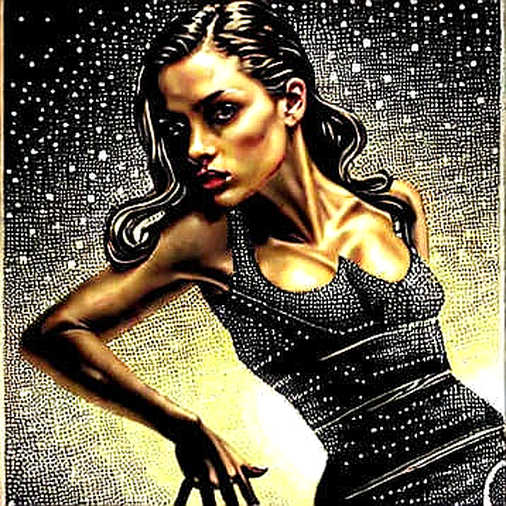
A short wire item crossed my terminal last week and refused to leave. The headline was almost apologetic in its brevity: Pope Francis, speaking on the subject of machine-generated imagery, had judged that AI art "lacks the spark of humanity." That was it. Two sentences, no venue, no timestamp, no transcript, no follow-up question from a journalist who might have asked whether the Pontiff meant the tool or the maker. A piece of news so thin you could read it through.
And yet I could not put it down, because the thinnest signals are often the ones that move the thickest markets. I have spent twenty-five years watching the crypto industry discover its own values in the reflection of outside institutions. When a moral authority of the Vatican's weight steps into a cultural question about machines and meaning, the reflex to dismiss it as a slow-news-week curiosity is exactly the reflex that gets traders run over. The important thing about the Pope's verdict is not whether it is right. It is that it exists at all — because the moment a global ethical institution declares that humanness is a property worth naming, it creates a demand for a technology that can certify it.
Where code meets culture, the real value emerges. And this is a collision of code and culture so clean that it reads almost like a designed experiment.
Let me be honest about the epistemic mess I am working from, because I will not pretend otherwise. The source item is unidentified, undated, and carries only one quotable fragment. There is no way to verify the occasion, the full context, or whether the phrasing survived translation from Italian through a wire desk. In my cybersecurity days I learned to treat an unverifiable packet as a threat indicator rather than a fact, and this packet is unverifiable. So I am not going to build an argument on the Pope's sentence as if it were evidence. I am going to build it on the vacuum around that sentence — the empty space where a provenance trail should be. Searching for truth in the noise of the network, the noise here is the point. We have a claim of authorship, a claim of meaning, and no chain of custody whatsoever. That is the whole story of the next cycle, compressed into a single wire item.
Context: The Long History of Trusting a Story You Cannot Verify
To understand why a two-sentence papal remark should matter to anyone holding crypto assets, you have to understand that the industry has been rehearsing this exact problem for a decade, and it has been losing.
In 2016 I audited the codebase of TheDAO before its collapse. I was not the only person to find the reentrancy vulnerability, but I was early, and I was loud enough in a private channel that three friends pulled roughly $150,000 of ETH out before the drain. That episode taught me something that had nothing to do with Solidity. What I had actually discovered was not a bug. It was a gap between the story people told themselves about the contract — "decentralized venture fund, governed by code, trustless" — and the reality of what the code could be made to do. The narrative said one thing; the bytecode said another. The arbitrage between those two sentences was the entire profit opportunity, and it was enormous. I have been trading that arbitrage ever since, sometimes in markets, sometimes in meaning.
Fast-forward to the summer of 2020. I was running Uniswap liquidity positions by day and writing explainers on Compound's yield-farming mechanics for a Telegram group of five hundred people by night. "The Yield Farming Primer" went viral because it did the one thing the industry's own documentation refused to do: it explained the incentive mechanism as a story about people, not a table of numbers. Ten thousand followers in a month. But the reason that piece resonates with me now, in the context of a papal verdict on AI art, is not the growth. It is that I watched, in real time, what happens when a community decides that a number is a truth. Liquidity mining APY is not yield. It is a subsidy dressed as yield. The TVL chart looks like organic growth until the emissions taper, and then it looks like a cliff, because the users who were never really users were only ever renting a position. A metric that can be manufactured is not a measurement. It is a marketing claim wearing a lab coat.
I carried that lesson into the NFT cycle. In early 2021 I stopped looking at floor prices and started interviewing holders. Thirty of them, across three meetups in Taipei and Tokyo, all of us pretending the Bored Ape Yacht Club was about art when it was really about belonging. My piece "Digital Paperclips or Cultural Capital?" argued that the collection's value was a sociological object, not a financial one — that the ten-thousand-piece cap was a scarcity ritual, that the floor price was a status tax, and that the whole edifice would deflate the moment the cultural energy that produced it moved elsewhere. I called the saturation before the crash, not because I had better data, but because I was measuring the thing that actually determined the outcome: sentiment, identity, and the story people told about themselves when they looked at the picture. The narrative is the asset; the code is the proof. In the NFT case, the narrative was spectacular and the proof was a JPEG.
Now layer the AI art question on top of that history and the shape of the problem becomes obvious. Every authenticity crisis in the last decade has been the same crisis in different clothing. Who made this? Is the claim true? Can I verify it without trusting the person making the claim? TheDAO asked it about a contract. Yield farming asked it about a return. NFTs asked it about an image. And now, with generative models flooding every visual channel on earth, the question has metastasized from a niche concern into a civilizational one. When the Pope says AI art lacks the spark of humanity, he is not making a technical argument. He is making an ontological one — a claim about what kind of thing a human creator is, and therefore what kind of thing a machine output can never be. And the moment that claim enters the public square as a moral verdict rather than a private opinion, it creates a market. Not for AI art. For proof of its opposite.
This is the part the wire item missed, and it is the part that matters to anyone with capital in this space. The Vatican is not a technology company. It does not ship products. What it ships is legitimacy, and legitimacy is the scarcest input in a market where every participant is anonymous and every claim is cheap to fabricate. When an institution with two thousand years of accumulated moral authority declares that humanness is a measurable property of a work, it is — perhaps without intending to — underwriting an entire category of technical infrastructure designed to certify exactly that. The narrative is the asset. The question is who gets to build the proof.
Core: Provenance Is the Primitive, and the Market Is Already Pricing It
Let me get technical, because this is where the story either becomes a real thesis or dissolves into vibes, and I have no patience for vibes dressed as analysis.
The problem the Vatican has stumbled into is what cryptographers call provenance. Provenance is the verified history of an object — where it came from, who touched it, what happened to it along the way. In physical art, provenance is a paper trail: auction records, gallery receipts, expert attributions, the occasional forensic analysis of pigments. It is expensive, slow, and forgeable at every link. The entire market for high-end physical art rests on a chain of custody that is maintained by a cartel of dealers and auction houses whose word is the collateral. That system works because the cartel is small enough to enforce its own rules and wealthy enough to litigate anyone who breaks them. It does not scale, it does not travel, and it does not survive contact with a generative model that can produce a convincing Rothko in four seconds.
Digital provenance has been the crypto industry's white whale for as long as I have been in it, and the reason is that the industry keeps confusing two different things. It confuses the record with the truth. A hash on a chain proves that a specific string of bytes existed at a specific time. It does not prove who made those bytes, what they mean, or whether the person who uploaded them had any right to. The DAO governance token problem applies here in a subtler form: a governance token is, stripped of its story, a non-dividend equity claim whose only hope of return is that a later buyer accepts the same story. Provenance tokens have the identical failure mode. If the only thing backing a "human-made" certificate is the collective belief that the certificate matters, then you have built a belief market, not a provenance system, and belief markets are wonderful right up until the moment they are not.
So what does a real provenance system look like? Let me walk through the layers, because the market is already pricing several of them, and it is pricing them badly.
The capture layer. Before anything can be attested, the moment of creation has to be recorded. This is the hardest layer and the least glamorous, and it is where most provenance startups quietly die. C2PA — the Coalition for Content Provenance and Authenticity, whose Content Credentials standard is now shipping inside hardware from several major camera and phone manufacturers — attempts to solve this by signing an image at the sensor, embedding a cryptographic manifest that travels with the file, and letting downstream editors append to that manifest rather than overwrite it. The idea is elegant: the camera becomes the notary. But the standard has a structural weakness that nobody in the crypto commentariat wants to name, which is that it trusts the capture device and the software pipeline. A signed photo from a compromised phone is a signed lie. A manifest that a generative model can strip or forge is not provenance; it is a suggestion. The capture layer is necessary and it is not sufficient, and anyone who tells you otherwise is selling you the capture layer.
The attestation layer. Once a moment is captured, someone has to make a claim about it, and that claim has to be cheap to issue, expensive to fake, and free to verify. This is where on-chain attestation protocols have quietly become the most interesting infrastructure in the space. The Ethereum Attestation Service lets any address publish a structured, revocable, schema-bound claim about any subject — a wallet, a file hash, a piece of content, another attestation — and lets anyone else verify that claim against the chain. The pattern is powerful because attestations compose. A capture device attests to a file hash. A human creator attests to a wallet. A wallet attests to a set of works. A curator attests to a subset. A marketplace reads the whole graph and prices the work accordingly. No single link has to be trusted; the graph is the trust. This is the difference between a certificate and a proof: a certificate asks you to believe an authority, while a proof lets you check the math yourself.
The identity layer. None of the above matters if you cannot bind an attestation to a human. This is the problem the entire industry calls proof of personhood, and it is where the AI art question becomes a crypto question with real teeth. If a generative model can produce a million images in an afternoon, then the scarce resource is not images. It is the verified human behind them. World ID, Humanode, and a dozen quieter attempts all attack the same target: a privacy-preserving proof that a unique living human stands behind a given action. The techniques vary — biometric enrollment, liveness detection, social graph analysis, hardware attestation — but the goal is identical, and it is the goal the Vatican just implicitly endorsed. When a moral authority says humanness is the thing that machines lack, it is describing a property, and properties that markets care about eventually get tokenized.
The storage and timestamp layer. Attestations are only as durable as the storage they point to. An attestation that references a URL is worthless the moment the URL 404s, which is why serious provenance work anchors to content-addressed storage — IPFS, Arweave, Filecoin — where the address is derived from the content itself, so the record cannot drift from the object. Combine content addressing with a chain timestamp and you get something genuinely new in the history of art: a work whose existence and integrity are verifiable by anyone, forever, without asking permission from a gallery, an auction house, or a court. The cartel that maintained physical provenance has no equivalent here, and that is either the greatest democratization of the art market in history or the greatest opportunity for well-funded forgery rings, depending on which layer you are standing on.
The machine-attestation layer. And now the frontier, the part I am actually spending my days on. If humans can attest, machines can attest too, and increasingly they must. The AI agent ecosystem emerging in 2025 is fundamentally a provenance problem wearing a productivity costume. When an autonomous agent books a flight, signs a contract, or generates a piece of content on your behalf, the question "who did this and on whose authority" becomes an existential compliance question, not a philosophical one. The standards bodies are moving: ERC-8004 and adjacent proposals sketch out registries for trustless agents, reputation systems for machine actors, and validation mechanisms that let a counterparty verify what an agent is and what it is allowed to do before transacting with it. My current research series, "The Trust Layer for Machines," is built on the conviction that this layer will be larger than the human-attestation layer within three years, because there will simply be more machine actions than human ones. The Vatican is worried about AI art. The Vatican should be worried about AI agents, and so should everyone holding a wallet.
Now, the market pricing. Here is where I part ways with the bullish consensus, and I want to be precise about why.
There is a story circulating that provenance is a clean, large, defensible market and that the winners will be the protocols that capture the most attestations. I think that story is half right, which is the most dangerous kind of right. The half that is right: provenance demand is real and growing, because AI-generated content is now indistinguishable from human content at the resolution that matters, and every institution with a brand to protect needs a way to tell the difference. The half that is wrong: attestation volume is not value capture. I watched this movie in DeFi. A protocol can accumulate millions of attestations the same way a farm can accumulate billions in TVL — by subsidizing them — and the subsidy is the whole trick. If you pay people to attest, they will attest, and when you stop paying, the graph goes quiet. The metric will look like adoption and behave like a rental. Any provenance protocol whose growth is driven by token emissions rather than by genuine demand from marketplaces, insurers, courts, or brands is running the same playbook, and it will end the same way.
What actually captures value in provenance is something narrower and less exciting: becoming the reference layer that other systems are forced to check. The value is not in issuing attestations. It is in being the oracle that a marketplace queries before it lists a work, the registry a court cites before it rules, the standard a camera manufacturer bakes into firmware. That is a winner-take-most dynamic, and it is won through integration and trust, not through emissions. The protocols that understand this are building relationships with the institutions that need the answer, not just the infrastructure that produces it. The ones that do not are building a very sophisticated subsidy machine and calling it a network.
And here is the contrarian angle on the AI art question specifically, which I have not seen anyone articulate. The Vatican's "spark of humanity" framing is emotionally powerful and technically backwards. Humanness is not a property of an artifact. It is a property of a process. A human who uses a generative tool to produce an image is still a human making choices — about prompt, about selection, about editing, about intent — and the artifact that results is the product of a human process even if no brush touched canvas. Conversely, a human who traces a photograph and calls it original is producing an artifact that claims humanness it does not have. The thing worth certifying is not whether a human was involved. It is what the human actually did, and in what order, and with what disclosed inputs. That is a provenance question, and it is answerable on-chain. "Was a human involved" is a vibe question, and vibes are exactly what the AI era has bankrupted.
This distinction matters enormously for how the technology should be built, and it is where the current crop of "human-made" certification schemes get it wrong. Most of them try to certify the maker. The right design certifies the process: a signed, time-stamped, append-only record of the creative acts that produced a work, with each act attributable to a key and each key bound to an identity by whatever proof-of-personhood mechanism the creator chooses. Under that design, a fully human work and an AI-assisted human work are both provable — they simply produce different records, and the market prices the difference the way it prices any other disclosed attribute. Under the current design, you get a binary stamp that is trivially gameable and tells you almost nothing. A binary certificate answers the wrong question confidently. A process record answers the right question honestly.
The stakes here are larger than the art market, and I want to widen the lens for a moment because the wire item's framing is too small. The reason provenance is becoming a first-class primitive is that the entire information environment is being re-plumbed by generative systems, and the plumbing is being installed by companies whose incentives do not align with verifiability. If the default is that any image, any voice, any document can be synthesized on demand, then the default state of the internet becomes unverifiable, and unverifiable information is not information at all — it is noise with a confidence interval. Provenance is the counter-move. It is the attempt to rebuild a chain of custody for reality itself, and it will either become standard infrastructure or it will become a luxury good available only to institutions rich enough to afford their own verification. The Vatican's intervention, whatever its theological merits, pushes the world toward the first outcome, because it names the problem at the level of values rather than the level of tools. That is genuinely useful, and it is why I am writing about a two-sentence wire item at all.
Let me also be clear-eyed about the interoperability problem, because it is where my skepticism about a certain kind of elegant-but-fragmented architecture bites. The provenance stack is being built in silos, and siloed provenance is nearly worthless provenance. A Content Credential that cannot be read by an on-chain attestation, an on-chain attestation that cannot be read by a marketplace, a marketplace that cannot read a proof-of-personhood registry — each of these is locally coherent and globally useless. The value of a provenance system scales with the number of independent parties who can verify it without a bilateral agreement, which means the winning architecture is the one with the most bridges, not the most elegant internal design. I have watched an entire ecosystem of technically beautiful, philosophically pure systems fail to capture value precisely because they optimized for internal coherence over external connectivity. Elegance is not a moat. Connectivity is. A chain of custody is only as strong as the number of independent parties who can check it, and every missing bridge is a hole in the fence.
Contrarian: The Human-Made Premium Is a Subsidy Narrative, and the Spark Is the Wrong Thing to Certify
Let me now say the thing that will annoy the most people, because it is the thing I actually believe after twenty-five years of watching narratives detonate.
The coming wave of "human-made" or "human-verified" certification is, in its current form, a subsidy narrative dressed in moral clothing, and it will fail in the same way that governance-token value capture failed. Here is the mechanism. A moral authority declares humanness valuable. Artists and rights-holders seize the declaration as ammunition. Marketplaces respond by introducing badges and filters. Brands respond by paying a premium for certified-human work. The premium attracts a flood of certification supply — artists who were always human now clamoring for the badge, platforms racing to issue it, middlemen inventing layers of verification between creator and buyer. And then the premium compresses, because the supply of "human-made" work is, definitionally, limited only by the number of humans who make things, which is to say it is not limited at all. What was scarce was never humanness. It was the credibility of the claim. And credibility, unlike humanness, can be manufactured, which means the premium migrates from the creators to the certifiers, and the certifiers end up owning the market. If you are an artist hoping the Vatican's verdict will finally get you paid, I have bad news: the verdict is a gift to the people who will sell you the badge, not to you.
The deeper problem is that the "human-made" frame is philosophically incoherent, and incoherent frames do not survive contact with adversarial markets. Ask the simple question: where is the line? A photographer who uses AI to remove a distracting element — is the work human-made? A painter who uses a generative tool to explore compositions before painting — human-made? A writer who uses a language model to outline — human-made? A musician who samples a synthesizer that uses a learned model — human-made? Every answer you give either excludes a legitimate creator or includes a machine contribution, and the moment you draw the line, the market races to sit exactly on the wrong side of it. Binary authenticity labels have been tried in wine, in organics, in fair trade, and in every case the label became a compliance cost that entrenched incumbents and did little for the producers it claimed to protect. The certification does not liberate the creator. It taxes the creator and enriches the certifier, and the moral authority that lent its name to the scheme is long gone by the time the invoices come due.
So what is the actual scarce thing, the thing worth building infrastructure around? I will tell you what my audit experience tells me. In security, the scarce thing is never the claim. It is the ability to verify the claim without trusting the claimant. When I found the reentrancy bug in TheDAO, the value I created was not an opinion. It was a verifiable fact about what the code would do under a specific input, a fact that anyone could check and that did not depend on my reputation. That is the model. The scarce thing in the AI era is not humanness and it is not even creativity. It is verifiable process: a record of what was done, by whom, in what order, with what disclosed inputs, that any counterparty can check independently. Build the infrastructure for that, and you are building something the market actually needs. Build another badge, and you are building a subsidy.
Here is the second contrarian claim, and it is the one that will cost me friends in the human-made camp. The rush to certify humanness is a defensive move, and defensive moves lose. The generative models are not going to stop, get worse, or become easier to detect. Every attempt to build a wall between human and machine output will be met with a model trained specifically to climb it. The market that survives is not the one that tries to segregate human work from machine work. It is the one that makes the process legible so that consumers can pay for what they actually value — which is often craft, sometimes provenance, occasionally novelty, and almost never a binary label. Consumers do not want "human-made." They want to know what they are buying, and the current information environment denies them that. Provenance is not about proving you are human. It is about proving you are honest, and honesty is a process, not a category.
And there is a final, uncomfortable point about who benefits from the moral framing itself. When a religious authority declares that machines lack a human spark, it is not only making a claim about machines. It is reasserting its own jurisdiction over the question of what a human is. That is a power move, and it is a smart one, and it should be read as what it is: an institution with declining institutional reach claiming authority over the newest and most contested frontier of culture. I do not say this to be cynical. I say it because understanding the motive is essential to predicting the behavior. If the Vatican's goal is jurisdiction over AI's cultural meaning, then expect more statements, more documents, and eventually concrete policy preferences — and expect those preferences to be shaped by the institution's interest in remaining the arbiter of humanness. That is not a reason to dismiss the verdict. It is a reason to price it correctly, which means treating it as a leading indicator of institutional demand for provenance infrastructure rather than as a moral truth about art. The narrative is the asset. The code is the proof. Do not confuse the two, and do not let the moral framing of the first blind you to the technical requirements of the second.
Takeaway: The Next Cycle Is a Provenance Cycle, and the Spark Is a Signal to Buy the Ledger
Here is where I land, and I want to land cleanly because the temptation with a story this symbolic is to drift into poetry and stop making sense.
The Vatican's verdict on AI art is not a technology story, a market story, or even really an art story. It is the sound of an old institution discovering a new question and reaching for the only vocabulary it has, which is moral. That reach is a signal, and the signal points at a single technical primitive: verifiable provenance. The next cycle will not be won by whoever generates the most content, nor by whoever certifies the most humanness. It will be won by whoever becomes the layer that other systems are forced to query when they need to know what is true about a piece of content, an agent's authority, or a creator's process. That layer is being built right now, in attestation graphs, in content-credential standards, in proof-of-personhood registries, in agent trust frameworks, and it is being built badly, in silos, by teams optimizing for internal elegance rather than external connectivity. The opportunity is not to build the most beautiful provenance system. It is to build the one that everyone else has to check.
I will be watching four things over the next two quarters. First, whether the Vatican follows the verdict with concrete policy — procurement rules, partnership announcements, a formal document — because a moral statement without institutional follow-through is noise, and a moral statement with follow-through is demand. Second, whether the "human-made" certification wave produces any actual value for creators or just a new class of rent-seeking middlemen, because that tells us whether the provenance market is pricing process or pricing badges. Third, whether the attestation protocols begin integrating with each other and with the hardware capture layer, because connectivity is the moat and silos are the trap. And fourth, whether the AI agent ecosystem produces its own provenance crisis — a deepfake agent, a forged delegation, a reputation attack — because nothing accelerates the adoption of a trust layer like a spectacular failure of the absence of one.
Where code meets culture, the real value emerges, and this is the cleanest cultural signal I have seen since the ETF approval told Wall Street it was allowed to look at a chain. The Pope said the machines lack a spark. He is right, and he is asking the wrong question, and the market will answer the question he should have asked: not whether the work was made by a human, but whether anyone can prove what was done. Searching for truth in the noise of the network, that is the only truth worth building. The spark is a story. The ledger is the proof. Buy the ledger.