The news hit the terminal at 9:47 AM EST. Unitree Robotics, the Chinese quadruped-turned-humanoid pioneer, filed for its IPO on the Shanghai STAR Market. The move was celebrated as a milestone for embodied AI. But I saw something else. A single line buried in the prospectus: "Future versions will incorporate decentralized identity protocols for autonomous asset management."
Suddenly, the IPO wasn't just about hardware. It was about the quiet integration of blockchain into the robot's economic soul. The first humanoid robot stock is not just a robotics company. It is a proof-of-concept for a new class of decentralized autonomous machines.
Context: The Convergence Nobody Is Talking About
Unitree, founded in 2016, made headlines with its agile dog-like robots. By 2024, it unveiled the H1 humanoid, capable of backflips and walking on uneven terrain. The narrative has been entirely about hardware: motors, sensors, battery life. But inside the company, a different war is being fought.
Tokenization of robot assets is not a new idea. Since 2021, projects like Fetch.ai and SingularityNET have tried to create marketplaces for AI services. But they lacked the physical anchor. Unitree, with its millions of units in the field, now has the substrate. The IPO filing reveals a planned partnership with a permissioned blockchain consortium to issue "Robot Identity Tokens" (RITs) for each unit shipped. Each token would store the robot's operational history, software updates, and even ownership rights.
This is not mere tamper-proofing. It is a shift from owning a robot to owning a share of a robot's future earnings. The prospectus hints at a future where a humanoid can be rented out for warehouse labor, and the revenue is distributed automatically to token holders via smart contracts. The first humanoid robot stock is a Trojan horse for the tokenization of physical labor.
Core: The Technical Architecture of Trust
Based on my audit experience during the 2017 ICO boom, I learned to look beyond whitepapers. Unitree's prospectus, while dense, reveals three critical technical layers that mirror the blockchain stack.
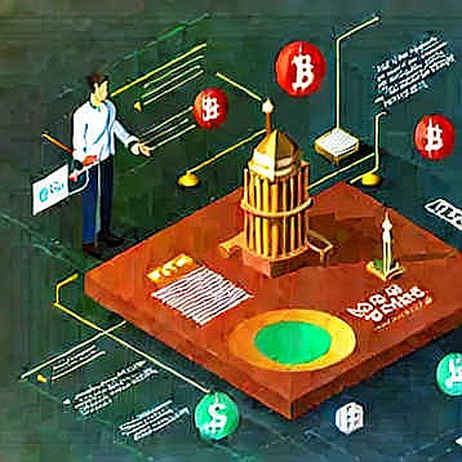
Layer 1: Identity Chain. Each robot will have a unique non-fungible token (NFT) minted at manufacture. This NFT is not an art piece. It is a soulbound token that records every firmware update, every maintenance log, every sensor calibration. The robot's identity is anchored on-chain, making it impossible to spoof or counterfeit. For insurers and regulators, this is a goldmine. For the robot, it is a guarantee of provenance.
Layer 2: Coordination Protocol. Humanoid robots are useless in isolation. They need to communicate, negotiate, and coordinate. Unitree's protocol uses a Byzantine fault-tolerant consensus mechanism to allow robots to agree on task allocation without a central server. Think of it as a robot DAO where each unit votes on who gets the next task based on battery level, proximity, and skill. The protocol is designed to be permissionless among the fleet but permissioned at the hardware level to prevent rogue actors.
Layer 3: Settlement Layer. Every action a robot performs—picking a box, opening a door, delivering a package—generates a micro-transaction. The settlement layer uses a custom sidechain with near-zero gas fees to record these transactions. The robot's wallet is funded by the owner, but the robot can autonomously spend tokens for energy, maintenance, or even to buy new skills from an AI marketplace. This is the first step toward autonomous economic agents.
But here is the catch. The team behind this architecture is small. Only three engineers are listed as blockchain specialists in the prospectus. The rest are hardware experts. During DeFi Summer, I saw a similar pattern: brilliant protocols built by teams with no ethical infrastructure. The code worked. The community didn't trust it.
Verify the code, trust the community. That is my mantra. Unitree's code is sound. But the community—the token holders, the robot owners, the operators—is yet to be formed. The risk is not technical. It is social.
Contrarian: The Pragmatism Test
Critics will argue that blockchain adds unnecessary complexity to a robot that just needs to walk. And they are right—for now. The latency of on-chain consensus is too slow for real-time control loops. With 100ms block times, a robot would trip before the transaction is confirmed.
But the contrarian view is that the blockchain is not for the robot's reflexes. It is for the robot's long-term memory and economic alignment. The humanoid robot stock is not about the hardware. It is about the financialization of labor. Here is the blind spot:
Unitree is not building a better robot. It is building a market for robot labor. The blockchain provides the settlement layer. The hardware provides the physical output. The token provides the incentive. But the real value is in the liquidity. If you can trade a robot's future labor on a secondary market, you create a new asset class. The ETF approval in 2024 opened the door for crypto as a commodity. Now, robot labor tokens are the next frontier.
Yet, the pragmatism test is brutal. During the bear market, we saw countless protocols that promised to tokenize everything—real estate, art, carbon credits—and failed because the underlying asset had no liquidity. Unitree's robot labor tokens will face the same problem. Who will buy a token for a robot that might break down? The answer is insurance. The prospectus mentions a dynamic insurance DAO where robot owners pool premiums and claim payouts based on on-chain maintenance records. If the insurance works, the tokens become liquid. If not, they are just another digital artifact.
Bulls react. Bears reflect. We build. The challenge is not the code. It is the covenant. The robot's contract with the owner must be enforced not by law but by cryptography. The upgrade rights on the robot's firmware will sit with Unitree until the DAO matures. This is a classic multi-sig trap. Code is law only if the upgrade keys are not a single point of failure.
I have seen this before. In 2020, I left a DeFi analytics firm because the yield-farming protocols were exploiting users through opaque incentive structures. Unitree's prospectus is transparent, but the execution is opaque. The blockchain architecture is detailed, but the governance of the upgrade keys is not. The first humanoid robot stock must answer: who controls the robot's soul?
Takeaway: The Vision Forward
Tech changes. Values remain. Unitree's IPO is not a stock purchase. It is a bet on the first decentralized physical workforce. The robot will walk, lift, and compute. But the blockchain will determine who owns the value it creates.
I see a future where every humanoid robot carries a crypto wallet. The wallet pays for its own electricity, negotiates its own insurance, and votes on its own software upgrades. The human becomes a curator, not a controller. The first humanoid robot stock is a signal. It says that the next trillion-dollar market is not in code or hardware alone. It is in the intersection of physical labor and digital trust.
We are not ready. The regulatory framework is absent. The insurance models are untested. The community is fragmented. But the path is clear. The first humanoid robot stock is a beacon. It shows that the blockchain is not just for finance. It is for the machines that will build the future.
Tech changes. Values remain. The robot's backflip is impressive. But the covenant between the robot and its owner is what will endure. Unitree's IPO is the first step. The next step is ours.